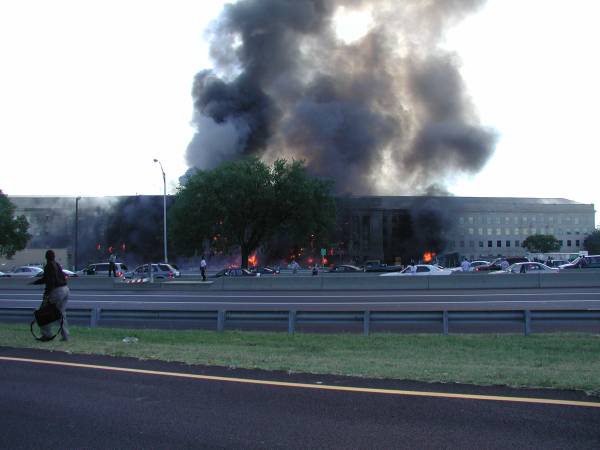
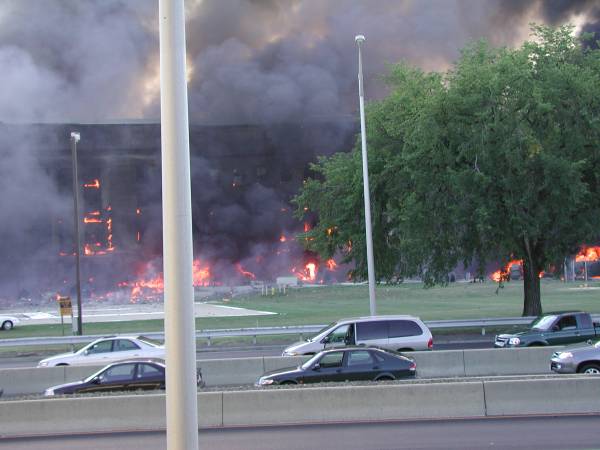
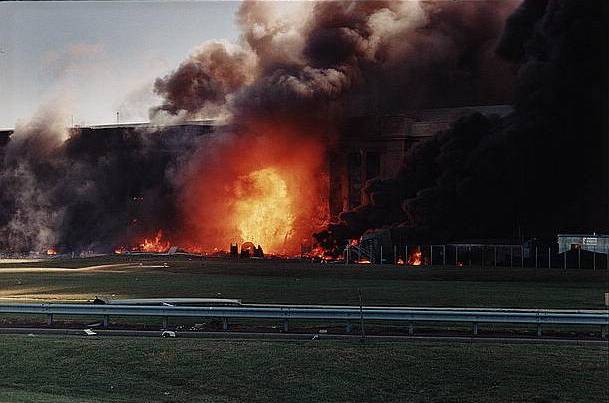
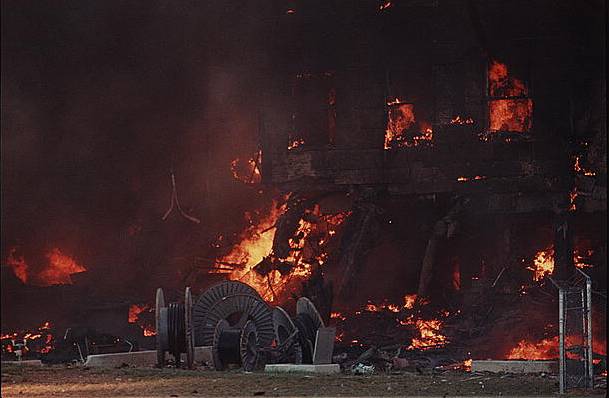
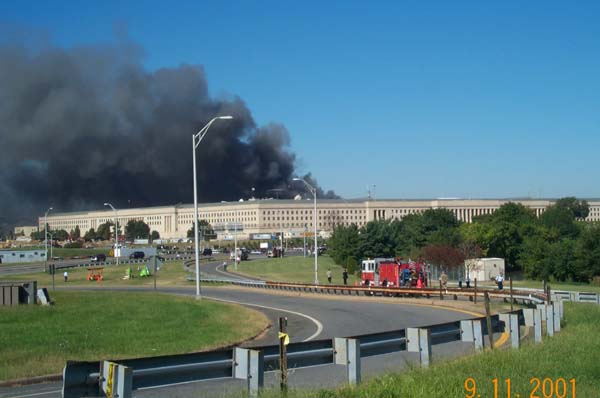
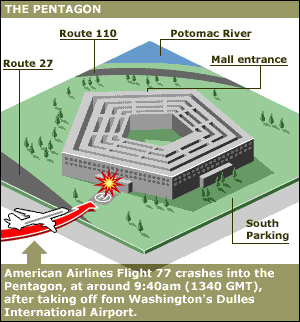
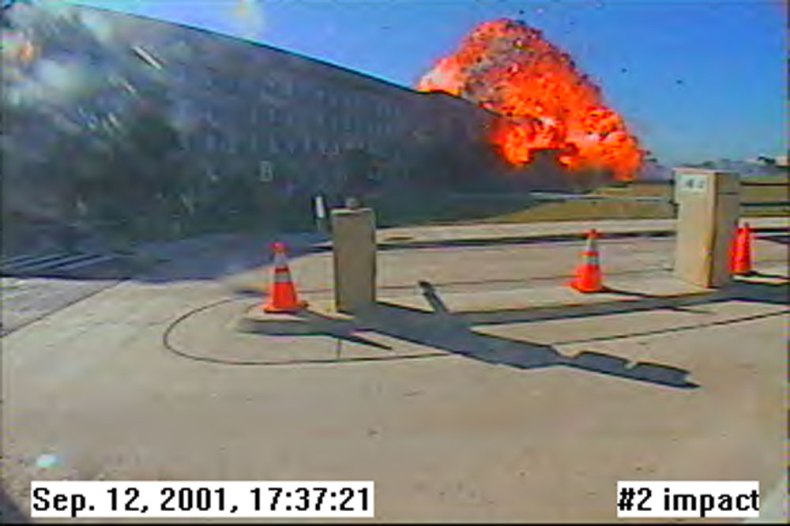
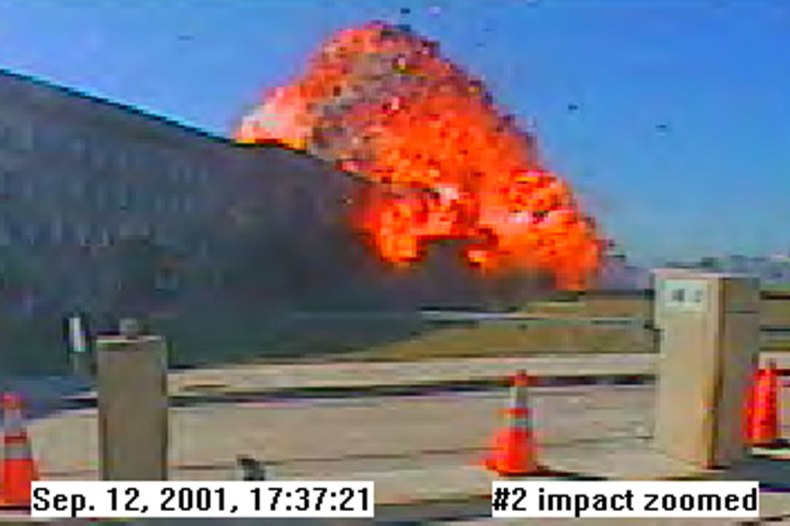
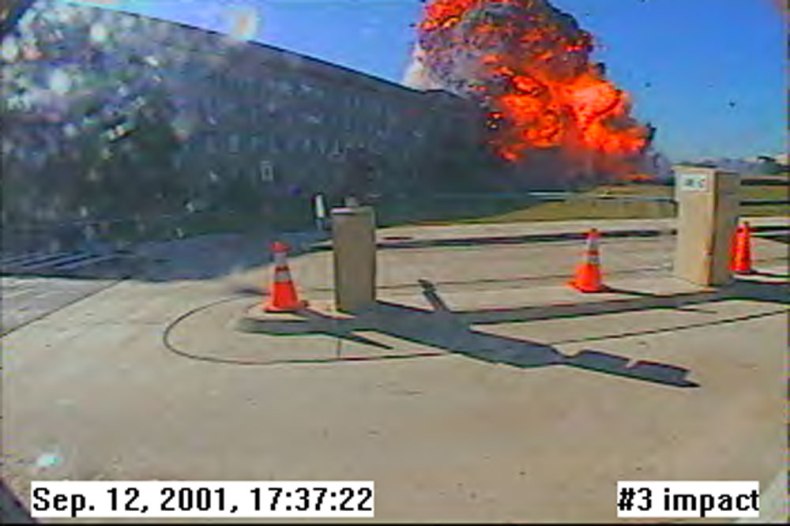
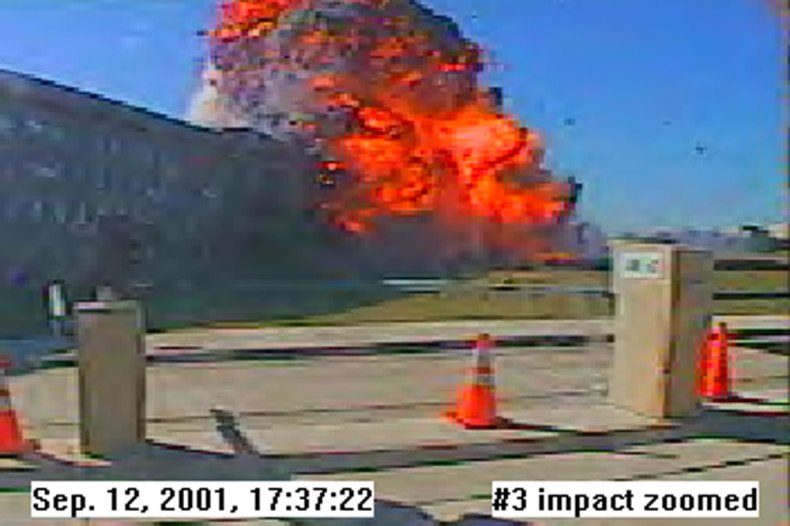
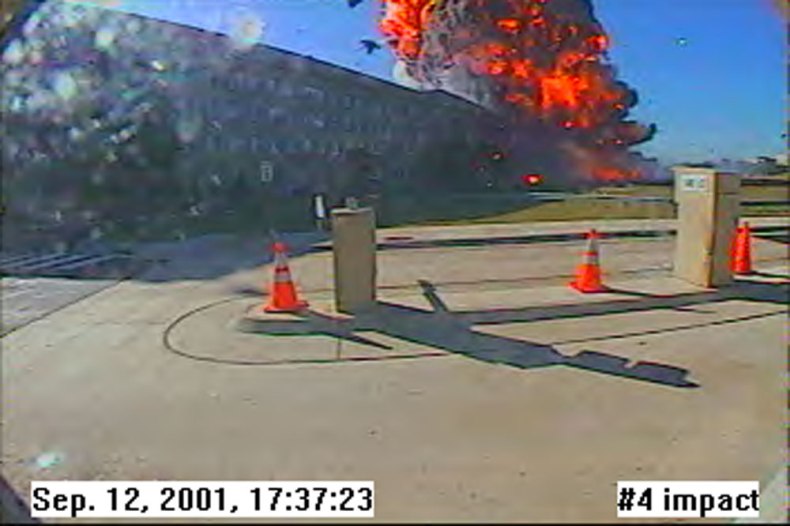
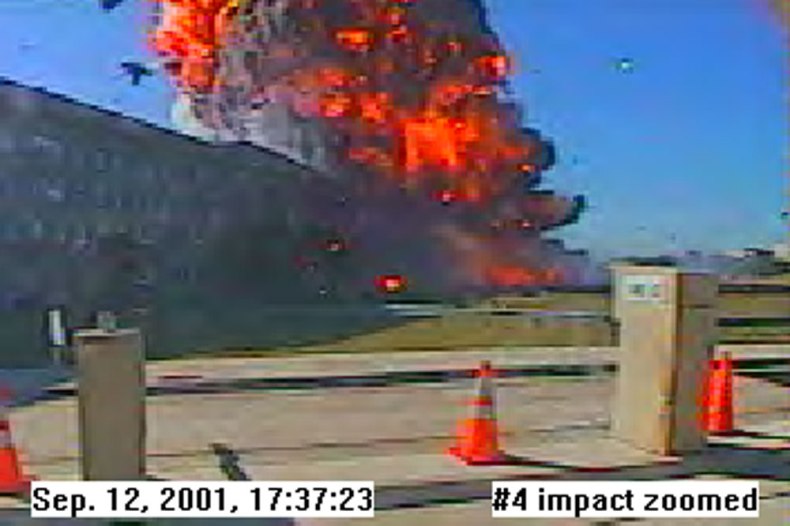
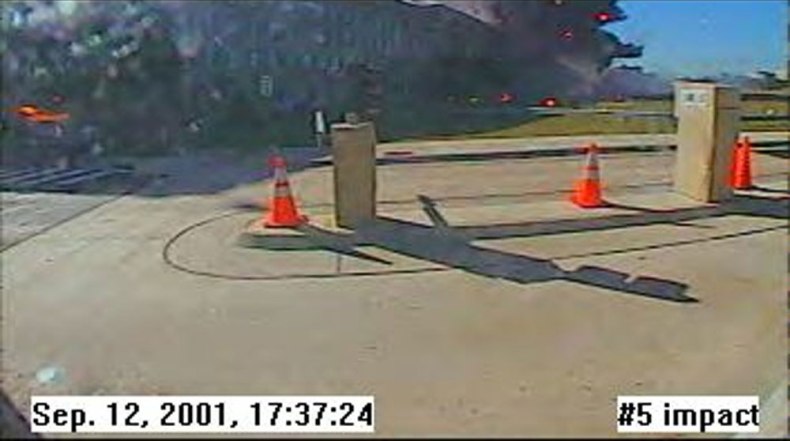
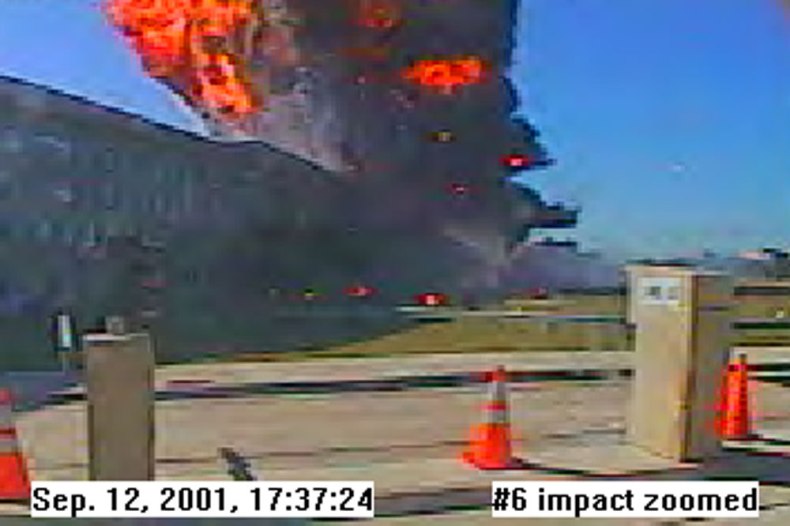
Steve Riskus took these pictures seconds after the plane hit the pentagon. He
was traveling on route 27 towards 395 when the plane crossed his path from the
right about 100ft in front of him and crashed into the pentagon.
WASHINGTON, Sept. 11, 2001 -- The Pentagon was a target today of an alleged
terrorist attack, which followed other alleged attacks on the World Trade Center
in New York City.
Workers inside the Defense Department headquarters in Arlington, Va., estimated
that a blast occurred around 9:30 a.m. Eastern time, which shook the building
and produced a billowing gray-black smoke plume that could be seen for miles
Army Maj. Jeff Mockensturm said he was in a meeting in Room 3D450 at that time
when an explosion erupted with a blinding orange light. Authorities confirmed
that a commercial airliner, possibly hijacked, had crashed into the building.
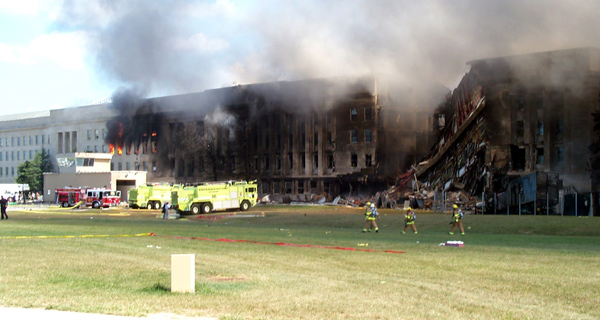
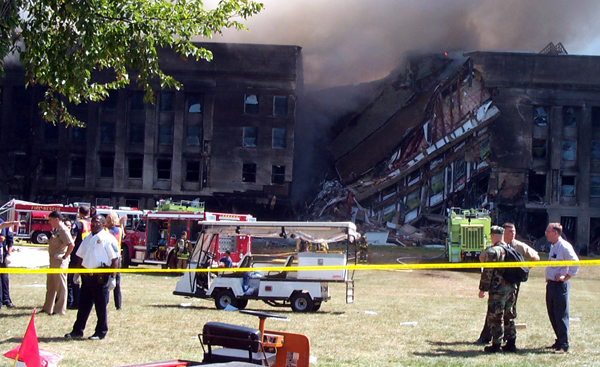
Smoke and flames rise from the Pentagon as firefighters continue to work to put
the flames out. A plane struck the building at about 9:40 a.m. Sept. 11, 2001.
Witnesses said evacuation of the building was calm and orderly. Hundreds of
military and civilian workers volunteered to help local medics. Photo by Jim
Garamone.
"It felt like it was right outside the window," Mockensturm said, who works for
Army's program analysis and evaluation office. "The window cracked, the ceiling
shook, the floor shook. I felt like it was an earthquake, like the whole
building was going to collapse." The major joined thousands of other Pentagon
employees who had been evacuated after the blast.
The aircraft crash at the Pentagon followed two others minutes earlier at the
twin towers of the World Trade Center in New York City. Both 110-story buildings
later collapsed. Authorities said they believed all three planes involved had
been hijacked by terrorists.
Back at the Pentagon, gray-black smoke billowed as an Air Force F- 16 fighter
circled overhead, on patrol for another airliner reportedly flying in the area.
No airliner was intercepted.
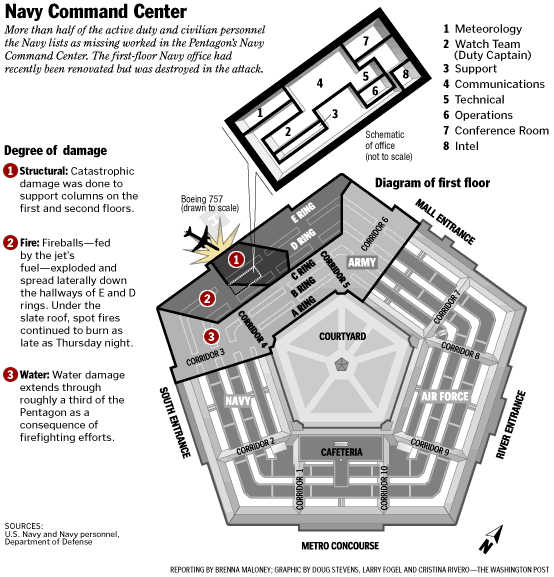
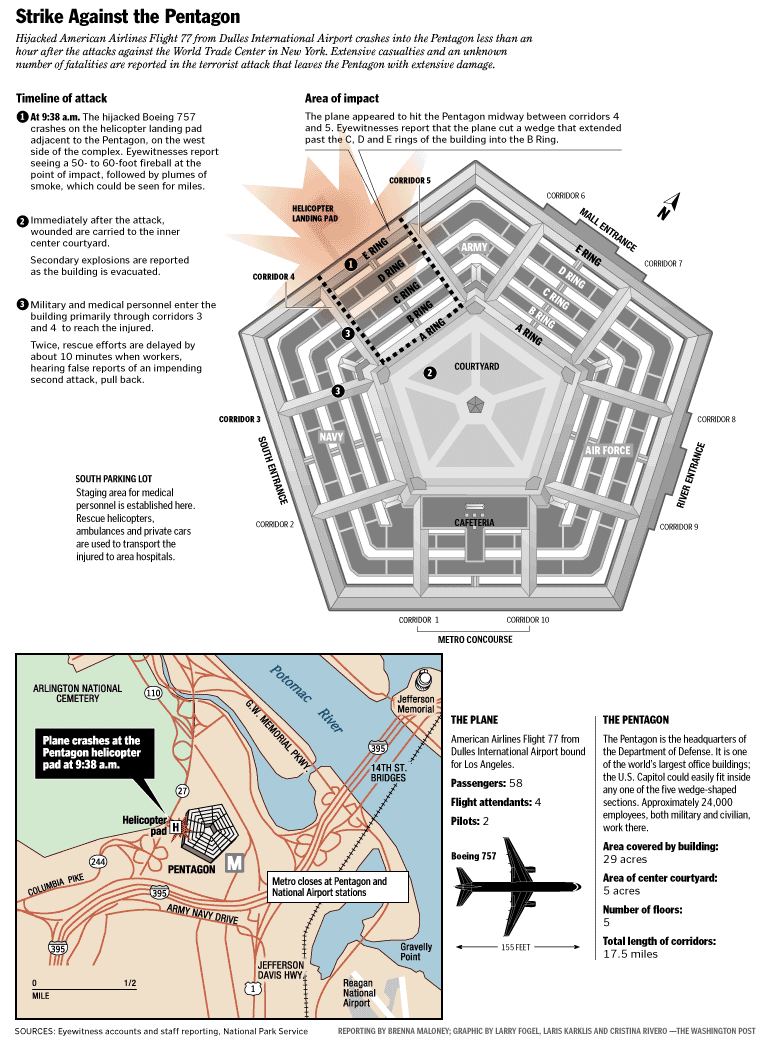
The plane that hit the Pentagon at about 9:40 a.m. Sept. 11, 2001, peeled the
building's reinforced concrete back all the way to the "B" Ring. The area
outside the Pentagon became a staging area for medical and emergency personnel.
Photo by Jim Garamone
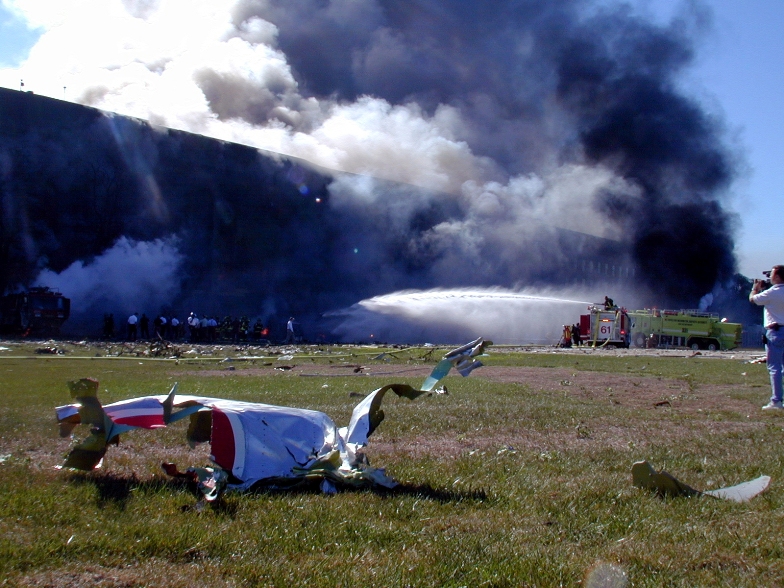
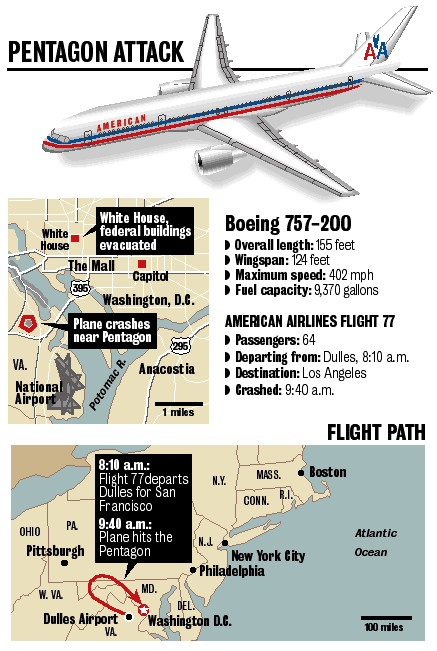
010911-N-6157F-001 Arlington, Va. (Sep. 11, 2001) -- Wreckage from the hijacked
American Airlines FLT 77 sits on the west lawn of the Pentagon minutes after
terrorists crashed the aircraft into southwest corner of the building. The
Boeing 757 was bound for Los Angeles with 58 passengers and 6 crew. All aboard
the aircraft were killed, along with 125 people in the Pentagon. U.S. Navy Photo
by Journalist 1st Class Mark D. Faram
Part of the building hit collapsed; firefighters continue to battle the flames.
The building was evacuated, as were other federal buildings in the Capitol,
including the White House.
The number of casualties is unknown. The Pentagon's workday population is about
24,000.
Smoke and flames rose over the Pentagon at about 10 a.m. today following a
suspected terrorist crash of a commercial airliner into the side of the
building. Part of the building hit collapsed; firefighters continue to battle
the flames. The building was evacuated, as were other federal buildings in the
Capitol, including the White House. The number of casualties is unknown. The
Pentagon's workday population is about 24,000. Updates will follow as they come
available. Photos by Gerry J. Gilmore.
credit:The Miami Herald
credit:The Washington Post
credit: BBC
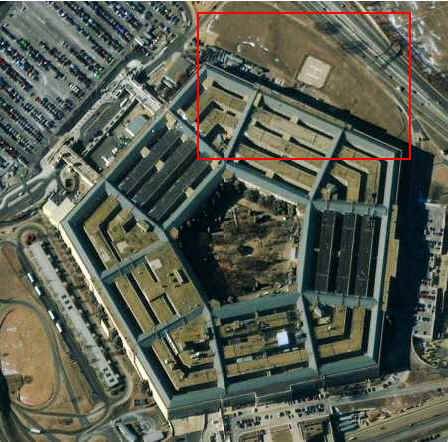
The Pentagon Before The Attack
spaceimaging.com
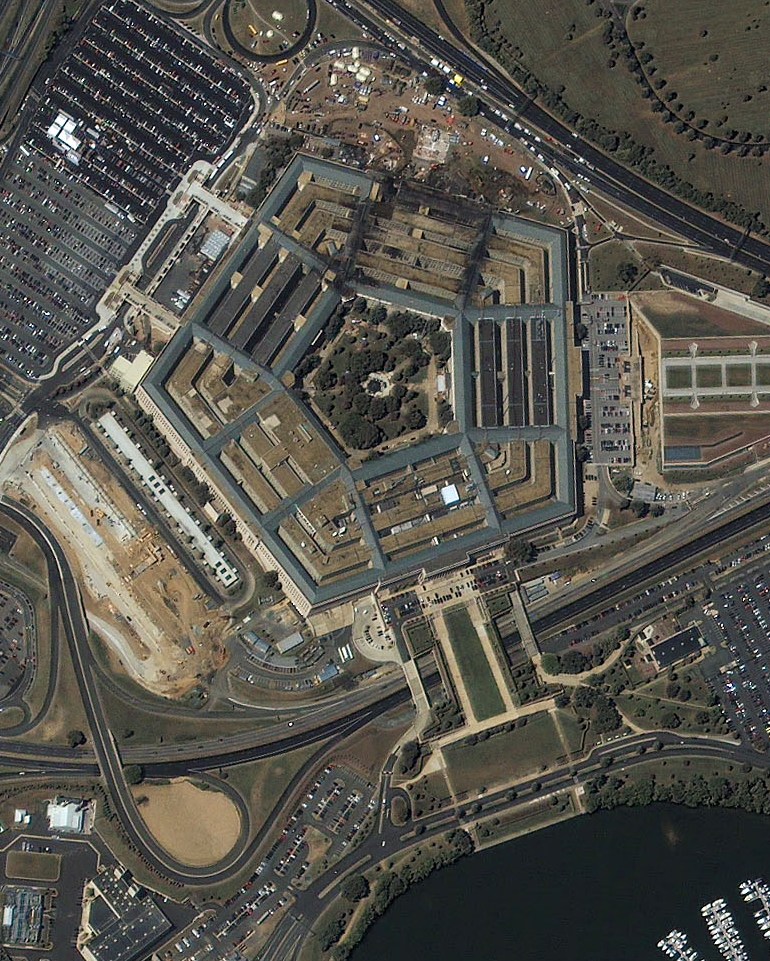
The Pentagon After The Attack
spaceimaging.com
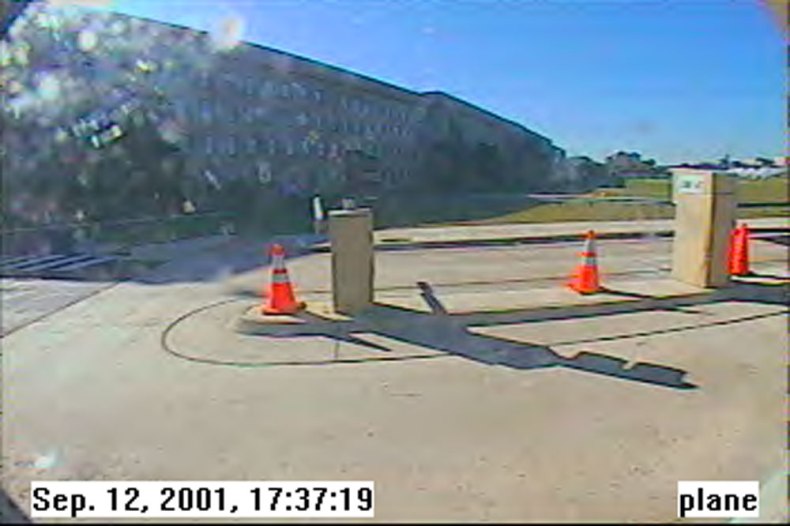
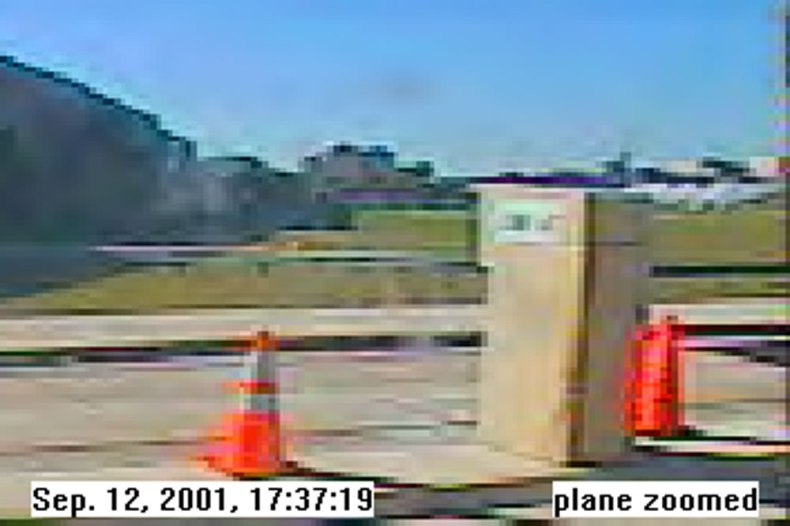
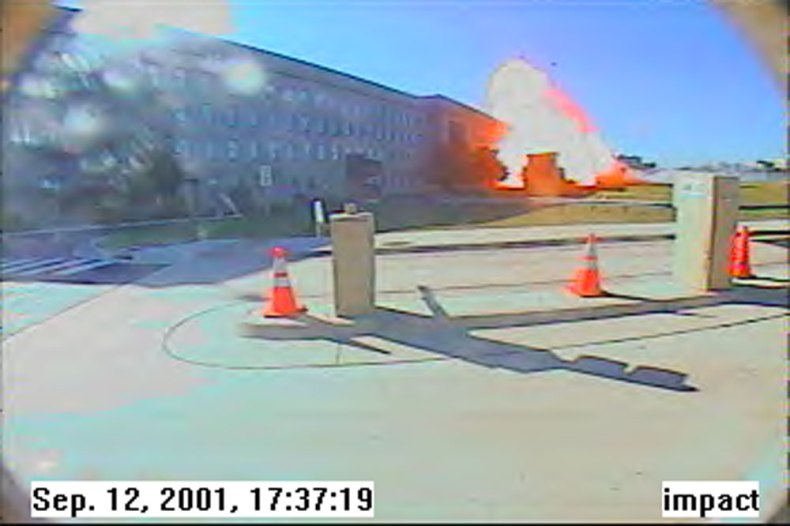
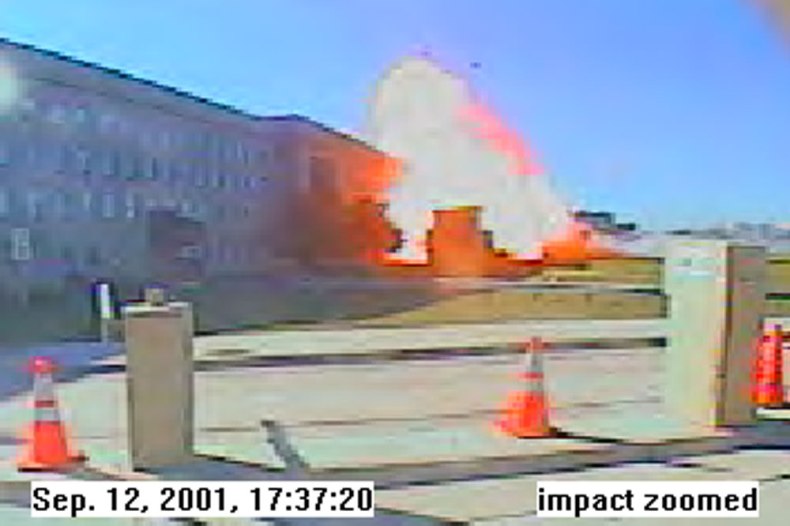
Pentagon Security Camera Images of Plane crashing into building
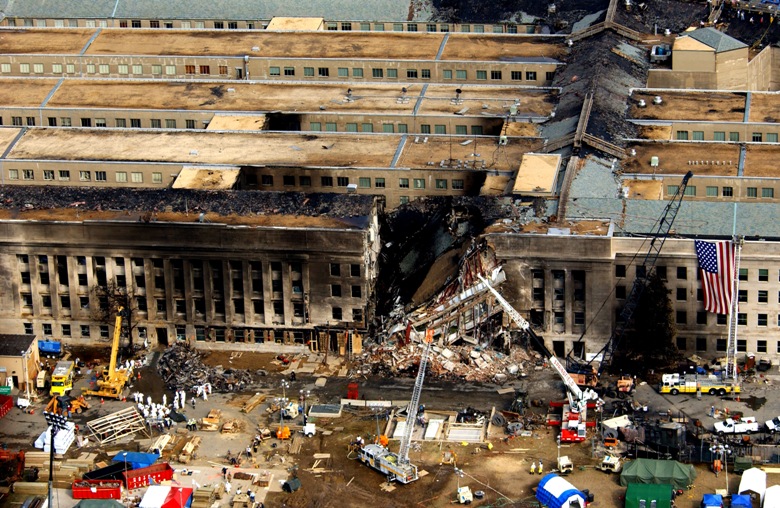
FBI agents, fire fighters, rescue workers and engineers work at the Pentagon
crash site on Sept. 14, 2001, where a hijacked American Airlines flight slammed
into the building on Sept. 11. The terrorist attack caused extensive damage to
the west face of the building and followed similar attacks on the twin towers of
the World Trade Center in New York City.
DoD photo by Tech. Sgt. Cedric H. Rudisill
DoD Holds Press Briefing in Pentagon
By Sgt. 1st Class Kathleen Rhem, USA
American Forces Press Service
Defense Secretary Donald H. Rumsfeld tells reporters that "people who work in
this building do so voluntarily, and they are brave people." Rumsfeld held his
press conference in the Pentagon at about 6:15 p.m., about eight hours after a
suspected hijacked commercial airliner smashed into the building Sept. 11, 2001.
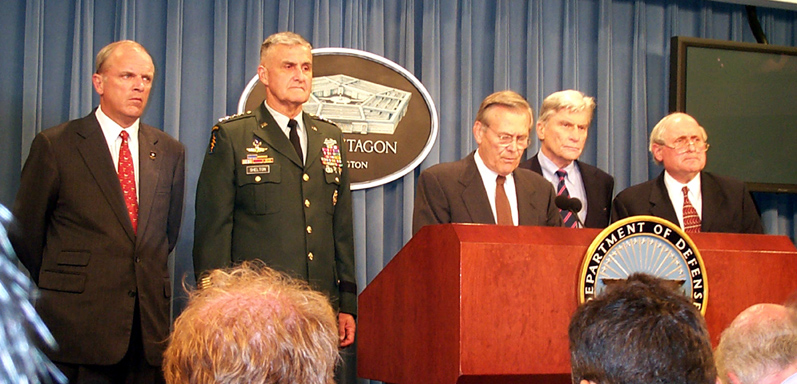
At the conference podium were (from left) Army Secretary Thomas White, Chairman
of the Joint Chiefs of Staff Army Gen. Henry Shelton, Rumsfeld, U.S. Sen. John
Warner of Virginia and U.S. Sen. Carl Levin of Michigan. Levin is chairman of
the Senate Armed Services Committee; Warner is ranking minority party member of
the committee. Photo by Jim Garamone.
WASHINGTON, Sept. 11, 2001 -- "The Pentagon is functioning" is the message
Defense Secretary Donald Rumsfeld sent by holding a press conference in the
building's briefing room barely eight hours after terrorists allegedly crashed a
hijacked commercial jetliner into the national military headquarters.
"It's an indication that the United States is functioning in the face of this
terrible act against our country," Rumsfeld said. "(The Pentagon) will be in
business tomorrow."
Accompanying Rumsfeld on the press conference podium were several other senior
federal officials including Chairman of the Joint Chiefs of Staff Army Gen.
Henry Shelton, Rumsfeld, and U.S. Sens. John Warner of Virginia and Carl Levin
of Michigan.
The secretary told reporters it's not possible to have solid casualty figures at
this time and that the various Defense Department components are working to
account for their people. He said there could be no survivors among the 64
passengers aboard the commercial plane that crashed into the building.
"There is no question but that the attack … today was a vicious, a
well-coordinated, massive attack against the United States of America," Rumsfeld
said. "What words the lawyers will use to characterize it is for them (to
decide)."
Shelton called the events of Sept. 11 "an outrageous act of barbaric terrorism
carried out by fanatics." He said this was a reminder of the "tragic dangers"
that military people face day in and day out. The chairman refused to discuss
what actions the United States would take in retaliation.
"But make no mistake about it," he said, "your armed forces are ready."
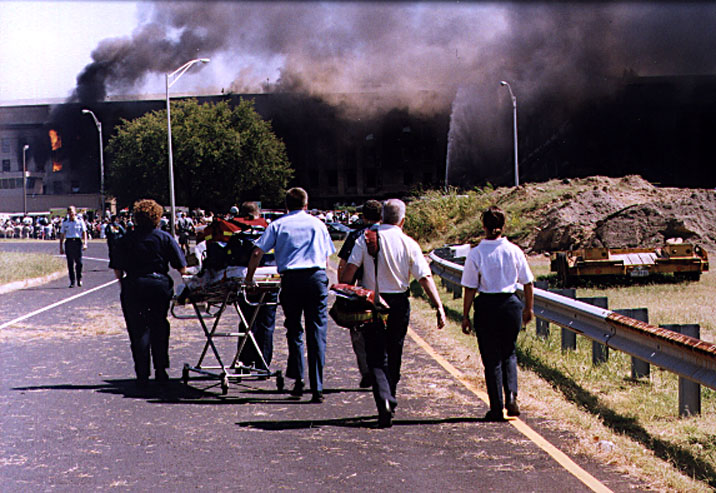
Military medical personnel rush to the Pentagon to aid victims of the Sept. 11,
2001, plane crash that called for the help of rescue workers and firefighters
throughout the metropolitan area. Photo by Paul Disney, USA
Levin, chairman of the Senate Armed Services Committee, called terrorists "the
common enemy of the civilized world." "Our intense focus on recovering and
helping the injured and families of those killed is matched only by our
determination to prevent more attacks," he said.
"This is indeed the most tragic hour in America's history," said Warner, former
committee chairman and its ranking minority party member. "And yet I think it
can be our finest hour as our president and those with him (including) the men
and women of the armed forces stand ready not only to defend this nation and our
allies against further attack but to take such actions as are directed in the
future in retaliation for this … series of terrorist attacks (that are)
unprecedented in world history."
Warner called upon the entire world to step up and help. "We're in this
together," he said. "The United States has borne the brunt, but who can be next.
Step forward and let us hold accountable and punish those that have perpetrated
this event."
Asked by reporters about possible retaliation, Rumsfeld called the question
premature.
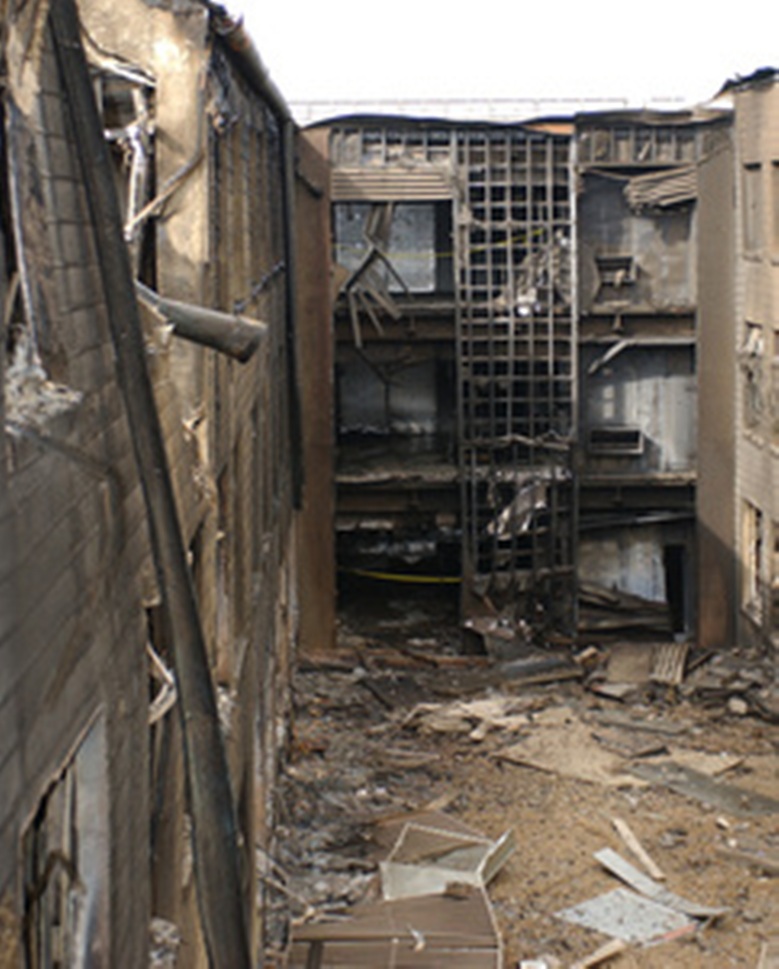
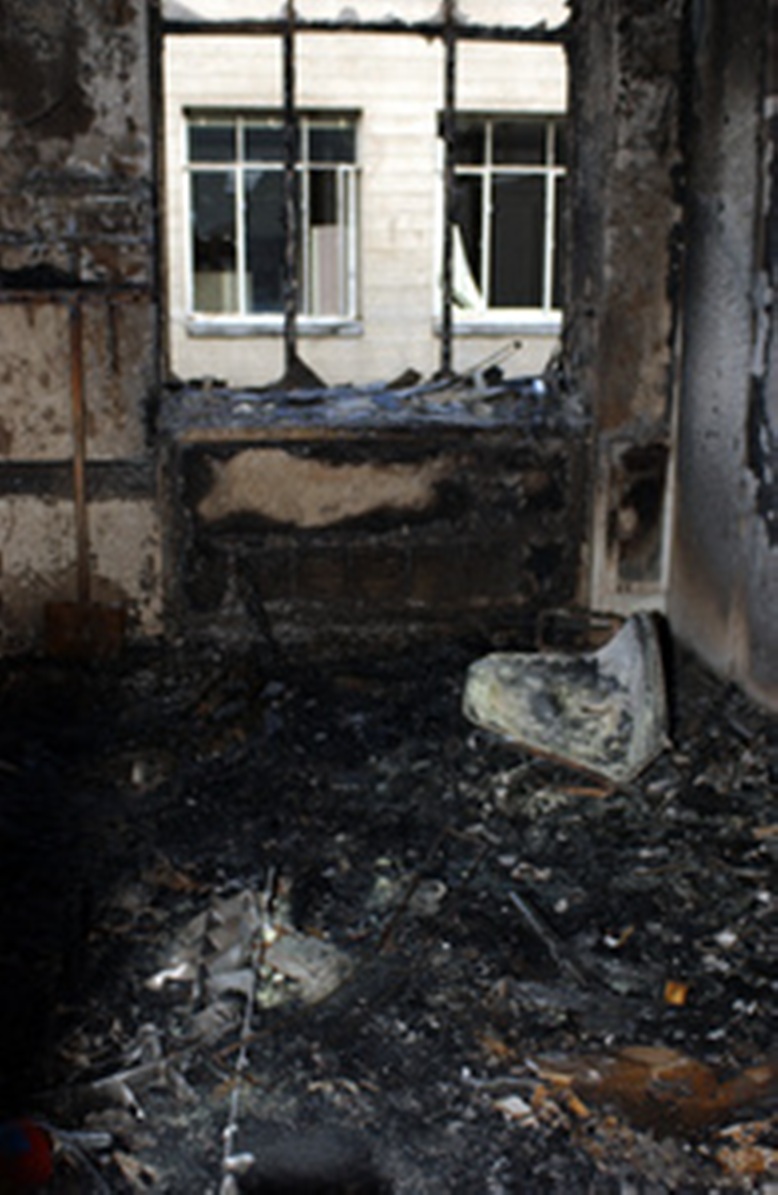
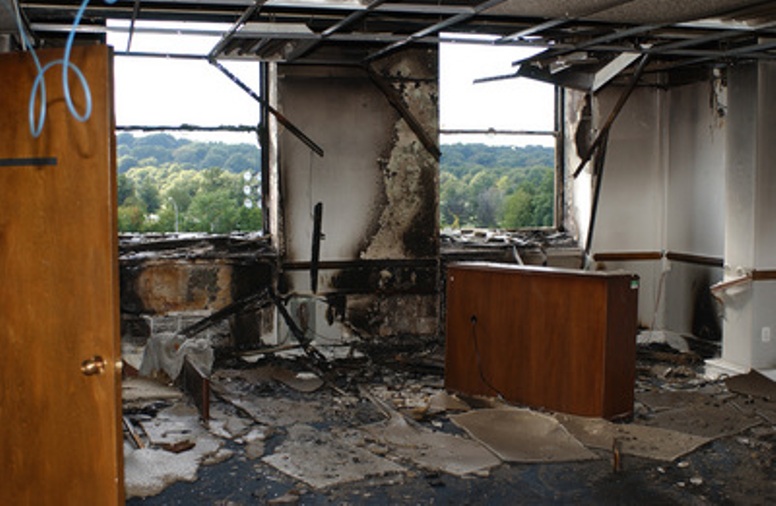
The effects of the blast and the fire caused when the hijacked American
Airlines flight slammed into the Pentagon on Sept. 11th, are evident in
this Sept. 14, 2001, photograph. The office was in the section of the
Pentagon slated to be renovated next. Offices in the newly renovated
section survived the blast and the fire much better. The terrorist
attack caused extensive damage to the west face of the building and
followed similar attacks on the twin towers of the World Trade Center in
New York City. DoD photo by Staff Sgt. Larry A. Simmons, U.S. Air Force
A wall of the E-Ring of the Pentagon leans inward and other walls show
fire damage in this Sept. 14, 2001, photograph. Damage to the Pentagon
was caused when the hijacked American Airlines flight slammed into the
building on Sept. 11th.
DoD photo by Staff Sgt. Larry A. Simmons, U.S. Air Force.
The effects of the blast and the fire The office was in the section of the
Pentagon slated to be renovated next. The terrorist attack caused
extensive damage to the west face of the building .
DoD photo by Staff Sgt. Larry A. Simmons, U.S. Air Force
DoD Official Provides Briefing After Pentagon Attack
By Gerry J. Gilmore
American Forces Press Service
WASHINGTON, Sept. 11, 2001 -- Survivors of today's apparent terrorist attack
against the Pentagon are urged to contact relatives to assure them of their
safety, a Pentagon spokesman said today.
"We are asking … people to phone their families and loved ones immediately to
let them know that they are OK," DoD spokesman Navy Rear Adm. Craig Quigley told
reporters outside the Pentagon at midafternoon. It was the first official DoD
news briefing after the incident.
Quigley said he had no information on the allegedly hijacked commercial aircraft
that crashed into an outside wall of the Pentagon around 9:30 a.m. Eastern time
today.
However, he remarked, "This was no accident."
Defense Secretary Donald H. Rumsfeld was in the Pentagon at the time of the
crash, and he walked outside the building to investigate and offer help, Quigley
said. The admiral noted that the injured had been taken "to a variety of area
hospitals" and added that Pentagon officials are working to provide a list of
injured.
"We will work our way through to identifying them and getting their names out to
their loved ones," Quigley said.
The Pentagon incident followed two other alleged aerial hijackings that resulted
in crashes that ultimately collapsed the 110-story twin towers of the World
Trade Center in New York City. All U.S. airports have been closed.
Quigley said defense officials began to assemble a crisis action team after the
second aircraft struck the World Trade Center.
"Shortly after that, the aircraft hit (the Pentagon)," he concluded.